Journal
Filming Dance: Choreograph the Camera with the Performer
Film dance with clear body lines, planned camera paths and edit points that preserve movement phrases rather than interrupting the choreography.
Refsee ·
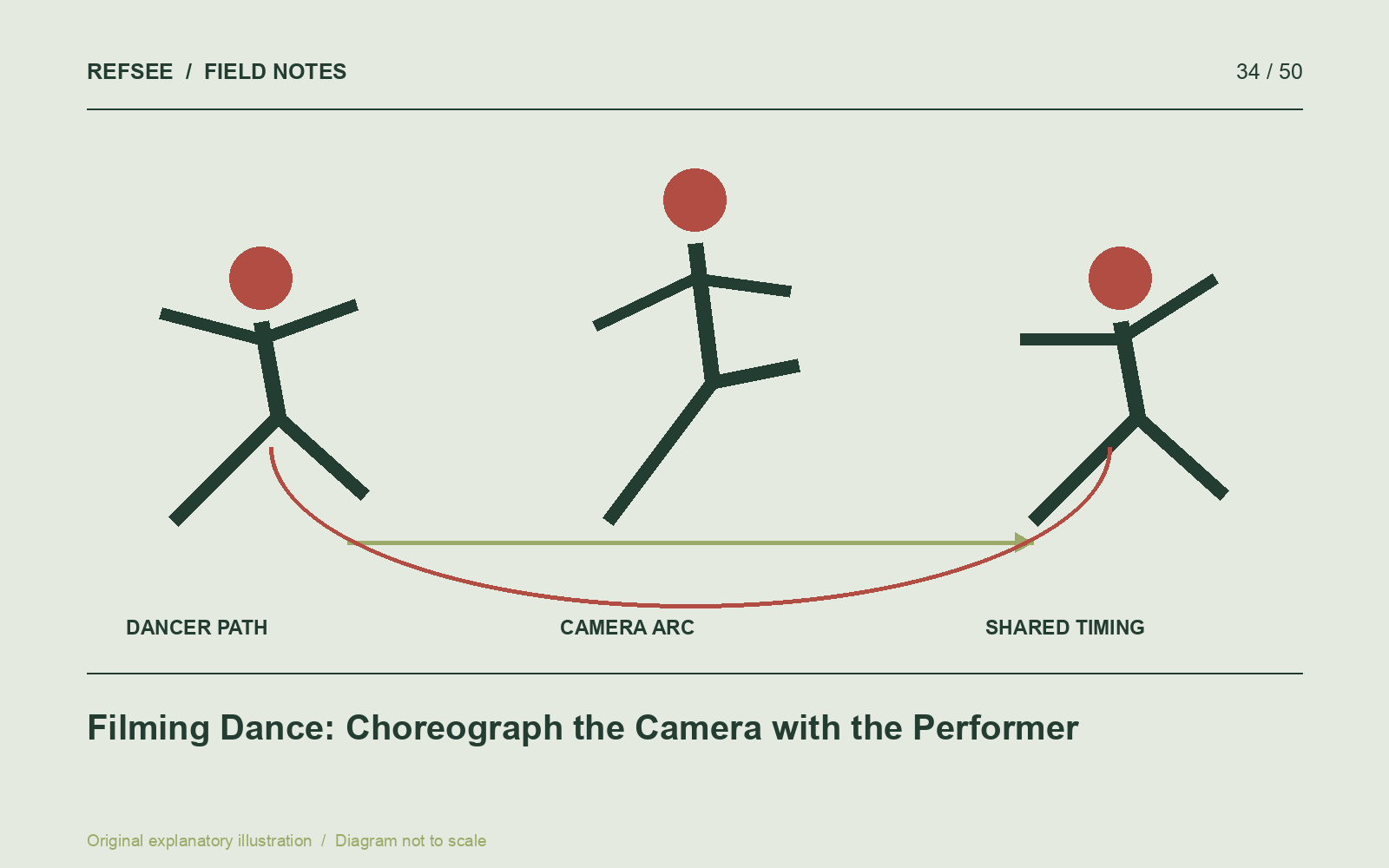
Dance on screen has two choreographies: the performer's movement and the camera's movement. They can support each other, oppose each other or create a new pattern together. Begin by learning the dance phrase before designing a shot that moves around it.
Identify the important body lines
Ask the choreographer which shapes and transitions must remain visible. A low angle may make a jump feel larger while hiding the relationship between the feet. A tight frame may capture expression but cut off the extension that defines the phrase.
Record a simple wide rehearsal from a stable position. Use it to mark accents, floor travel, turns and moments of stillness. This reference helps the camera team recognize the movement rather than react late to every change.
Make the camera movement answer the dance
A lateral move can accompany travel across the floor. An arc can reveal a turning body. A locked frame can let complex choreography remain legible. Do not add movement merely because the subject is moving.
Rehearse the camera path with clear spacing and communication. The performer should know where the operator and equipment will be. Check the floor, cables and stopping positions before rehearsing at full intensity.
Preserve complete phrases
Capture a full usable version of important choreography before collecting fragments. Close-ups and alternative angles are easier to integrate when the edit has a coherent spatial base. Keep entrances, exits and landing positions consistent when continuity matters.
Choose frame rate according to the movement's intended feel. Slow motion can reveal a transition, but it can also change the rhythm and apparent weight of the choreography. Show tests to the dancer or choreographer rather than assuming slower is more expressive.
Cut where energy transfers
Useful edit points may occur at a turn, a change of direction, a landing or a moment when the viewer's attention shifts. Cutting on every musical beat can interrupt a phrase that needs to unfold. Compare an uninterrupted take with the edited version.
Review whether the film preserves the performer as an active presence rather than reducing them to disconnected body details. The camera should help the audience experience the choreography's timing, effort and space, even when the final treatment is highly stylized.