Journal
Match Cuts: Connect Shots Through Shape, Motion or Meaning
Design match cuts using a shared shape, movement, gaze or sound, and learn when a visual match strengthens the story rather than becoming a trick.
Refsee ·
A match cut connects two shots through a shared visual or conceptual element. That element might be shape, movement, composition or an idea. The cut can make a transition feel fluid while creating a meaningful relationship between otherwise different places or times.
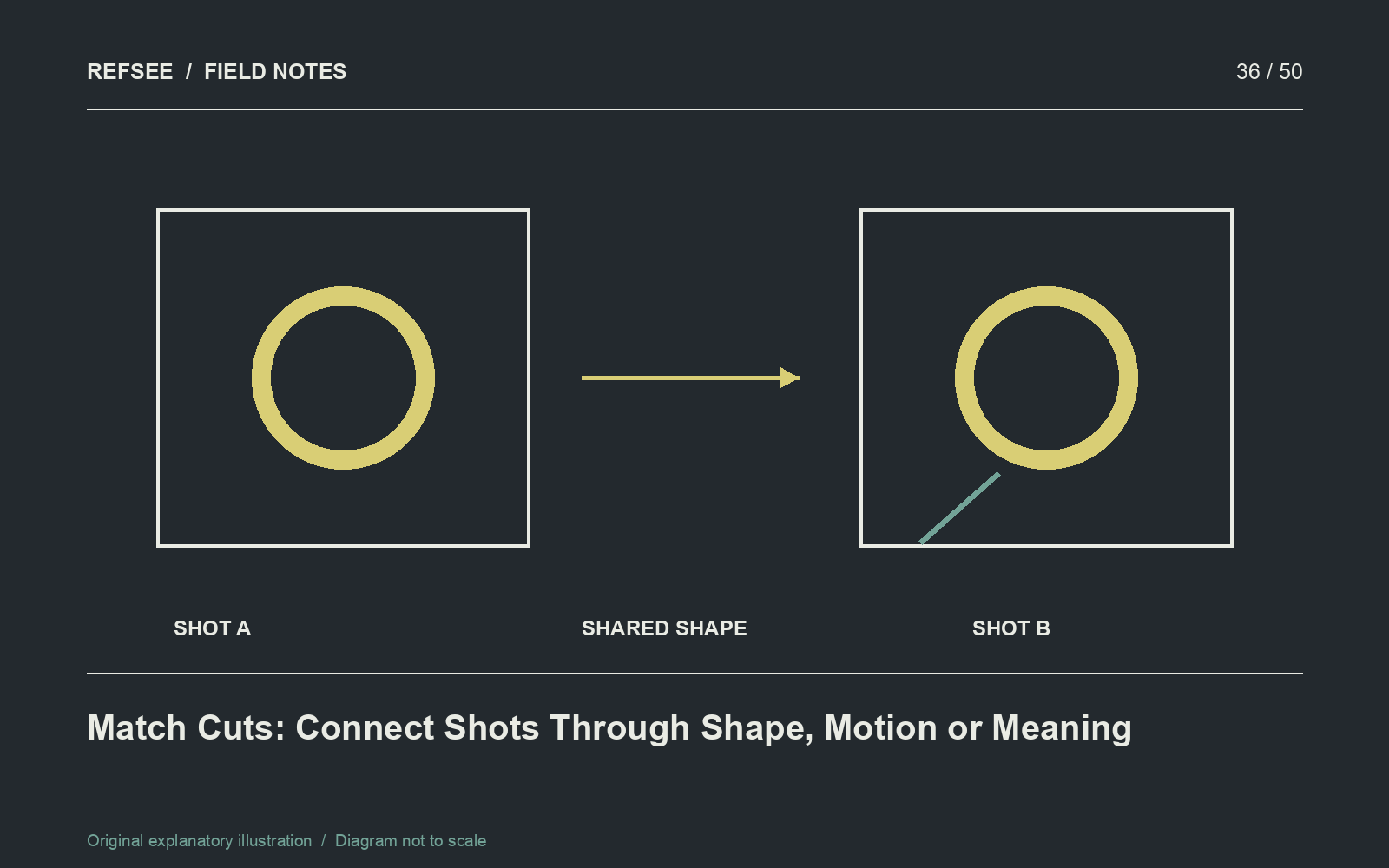
Choose what the audience should connect
A circular cup seen from above can cut to a circular architectural opening. The shape creates recognition, but the story needs a reason for the connection. Perhaps a domestic ritual leads into a much larger journey, or a repeated shape links two characters' environments.
Write the intended meaning before planning the match. If the only explanation is “these objects are both round,” the transition may still be playful, but it should not carry more narrative weight than it can support.
Match the dominant cue
For a graphic match, compare size, position, brightness and shape. The images do not need to be identical, but the common feature should be easy to recognize at the speed of the cut. Simplify competing detail around it.
For a movement match, align direction and the phase of the action. A hand beginning to turn one object can continue through a similar turn in a different setting. Shoot enough before and after the key action to give the editor timing options.
Distinguish a match cut from continuity coverage
Cutting between angles of the same action can preserve continuity. A match cut may instead bridge a major change in location, time or subject. Both can use matching movement, but their narrative jobs differ.
Check whether the viewer needs an additional cue to understand the new space. A clever match that causes several seconds of confusion may be wrong for an instructional or product sequence where clarity matters most.
Test with and without sound
Sound can smooth a visual transition or deliberately contradict it. A sound that begins before the next image may prepare the viewer for the destination. A hard change in sound can make the visual similarity feel more surprising.
Build a rough version early with phone footage or stills. Compare the matched cut against a straightforward transition. Keep the match when it adds a relationship, a useful rhythm or a memorable shift; remove it when it draws attention away from the scene it was meant to connect.