Journal
Motivated Lighting: Make a Scene's Light Feel Believable
Design motivated lighting by connecting visible windows and lamps to your key light, then checking direction, color and contrast across the scene.
Refsee ·
Motivated lighting means that the lighting design appears to come from a source that belongs in the scene. That source might be a window, table lamp, television or open doorway. The actual illumination can come from professional fixtures outside the frame. What matters is whether the viewer accepts the visual relationship.
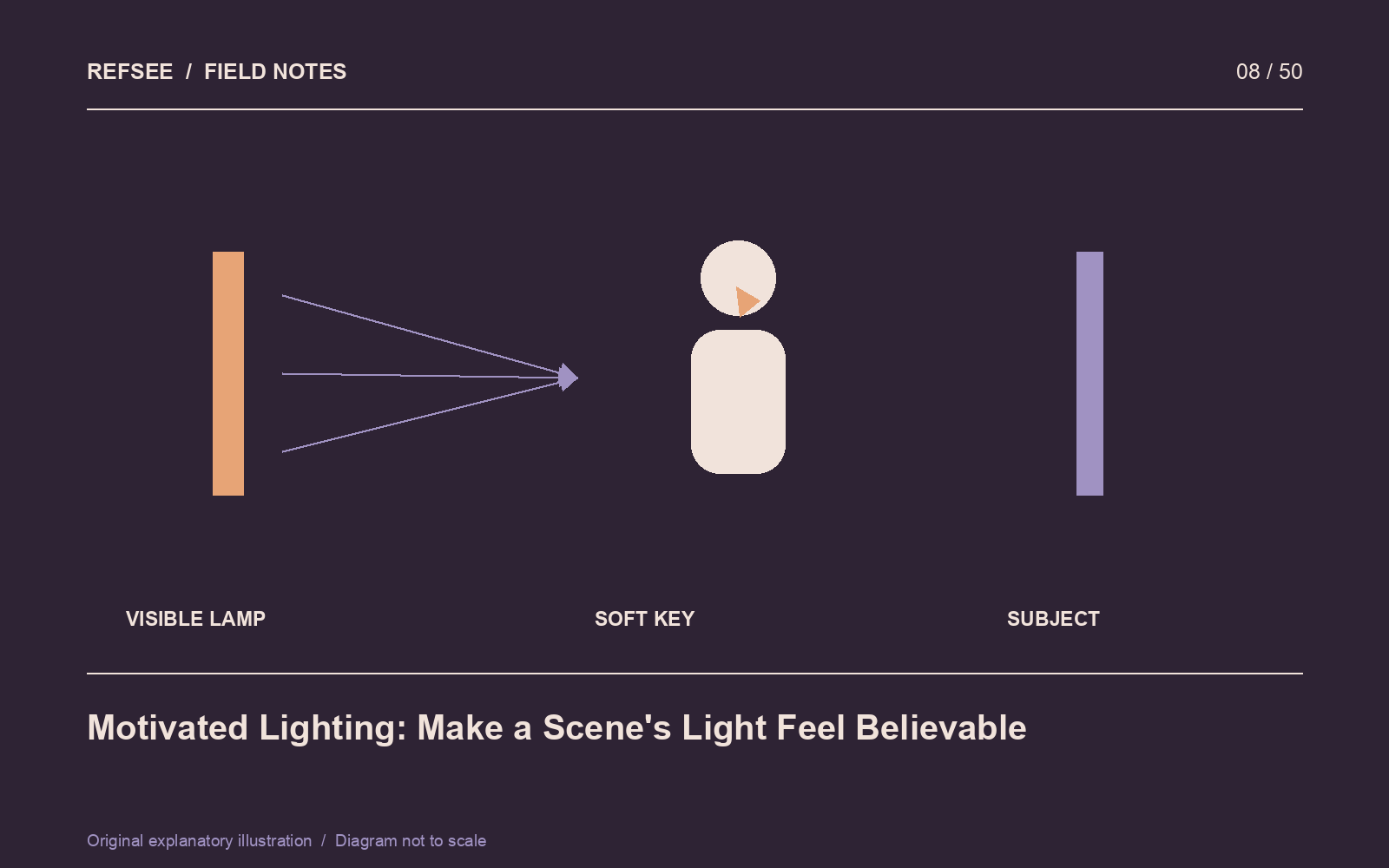
Name the source before choosing the fixture
For each scene, ask where the dominant light seems to originate. A late-night living room might be organized around one table lamp and cooler light from outside. Decide which source should shape the face and which should describe the space.
Draw a quick plan showing the camera, performer and visible sources. This prevents a common mistake: placing a flattering key beside the camera that has no plausible relationship to the lamp in the background.
Match direction before brightness
Place the off-camera key so that shadows fall in a direction consistent with the implied source. It need not sit directly beside a practical lamp, but the difference should not call attention to itself. Check the nose shadow, the shadow under the chin and nearby objects.
Then refine softness and color. A bare bulb can plausibly create a harder pool of light, while a broad window suggests softer illumination. You can interpret reality for the story, but several contradictory cues make the construction easier to notice.
Let the practical and key do different jobs
The visible lamp may need to be relatively dim to retain shade detail, while a larger hidden source provides exposure on the actor. This is a normal division of labor. Test the practical's brightness in camera before committing to the final balance.
When the character walks away from the lamp, consider letting the face become darker rather than chasing identical exposure through the entire room. A believable change can support the action. If continuity requires another source, establish it visually or introduce it subtly.
Check the reverse angle
A lighting plan that makes sense in a wide shot can become confusing in a close-up from the opposite direction. Keep a record of the source side and the relative color of the lights. Adjust fixtures for the new angle while preserving the impression of the same space.
The goal is not literal simulation. It is a consistent visual explanation that gives you freedom to shape faces, guide attention and sustain the scene's emotional tone.