Journal
Documentary Interviews: Build a Frame That Helps People Speak
Set up documentary interviews with comfortable eyelines, controlled sound, believable lighting and background choices that support the person's story.
Refsee ·
A documentary interview setup should serve both the image and the conversation. A technically polished frame is of limited value if the person feels trapped, distracted or unable to engage with the interviewer. Plan the room so that the camera, sound and lighting can operate quietly once the interview begins.
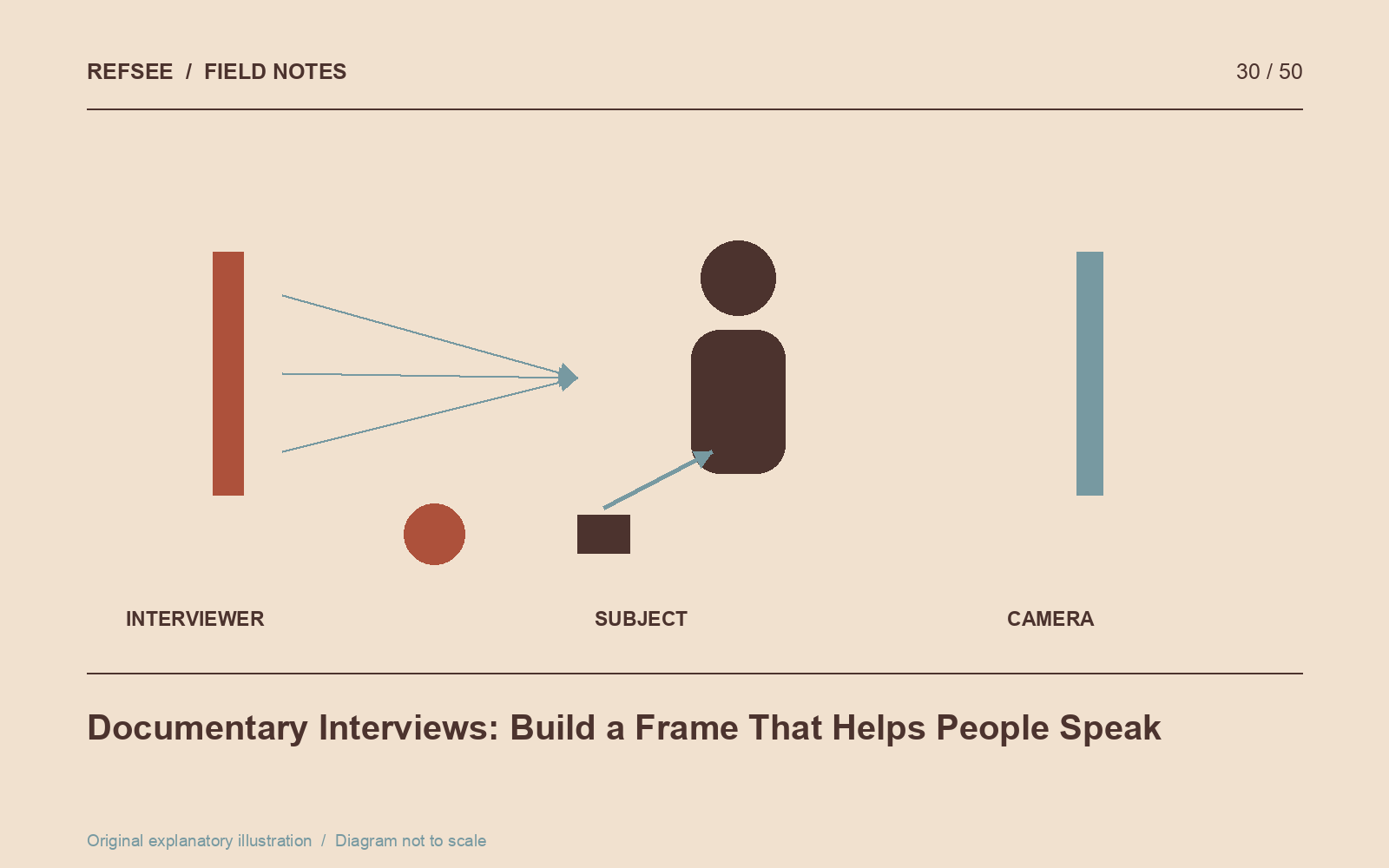
Choose the eyeline deliberately
For an off-camera interview, place the interviewer close enough to the lens axis that the face remains readable, but far enough aside to create the intended relationship. For direct address, explain clearly where the person should look and why.
Keep the interviewer at a comfortable eye height. An accidental high or low eyeline can change posture and make sustained conversation tiring. Test the framing with a stand-in before seating the interviewee for an extended period.
Make the background relevant and quiet
Choose a background connected to the person's life or work when it adds useful context. Avoid treating meaningful objects as random decoration. Give the subject enough distance from the background to control separation and reduce distracting detail.
Look for bright patches, moving screens and lines that appear to emerge from the head. A small camera move can solve these problems without rearranging the entire room. Check the frame again when the person naturally changes posture.
Keep lighting consistent and comfortable
A soft key motivated by a window can provide a believable starting point. Control changing daylight if the conversation will be long, or select a position less sensitive to direct sun. Avoid placing fixtures where the interviewee must stare into them.
Record a brief test with the actual person. Skin, glasses and clothing can respond differently from the stand-in. Adjust reflections in glasses through small changes in source height and angle while maintaining comfortable illumination.
Prioritize sound and continuity
Listen for ventilation, traffic and clothing noise. Coordinate microphone placement before the conversation becomes emotionally involved. Capture room tone and allow quiet pauses around answers rather than speaking over the final words.
If filming additional angles or relevant activities, keep them honest to the context of the interview. Do not use an unrelated reaction shot to imply a response that did not occur. The goal is a clear, attentive presentation that lets the person's words and behavior carry the scene.