Journal
Build a Music Video Concept from the Song
Develop a music video by mapping the song's structure, choosing a visual rule and planning how performance, imagery and change work together.
Refsee ·
A music video concept becomes stronger when it grows from the song rather than sitting beside it. That does not mean illustrating every lyric literally. It means understanding the track's emotional movement and choosing a visual system that can develop with it. Listen several times before searching for references.
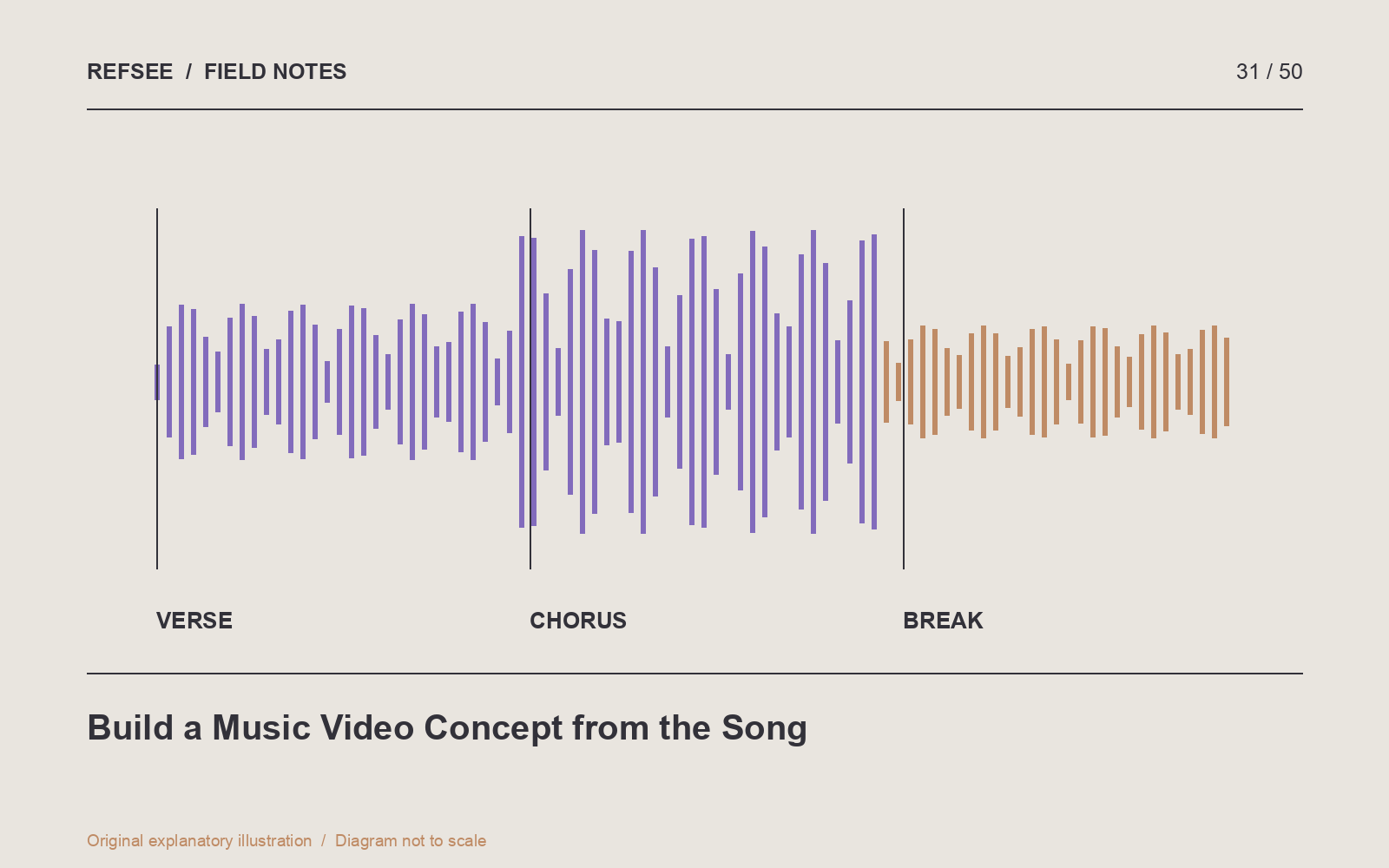
Map the song's changes
Mark the intro, verses, choruses, bridge and ending with timestamps. Note where instrumentation, vocal delivery or energy changes. A quiet section can contain emotional escalation, while a loud chorus can feel static if it repeats the same idea.
Write one sentence describing the song's central tension. “Someone performs confidence while privately unraveling” offers more visual possibilities than a list of colors or locations. Use that tension to judge whether an image belongs in the video.
Choose one visual rule
A rule could be that the camera moves closer with every verse, the set gradually empties, or the performer remains still while the surroundings change. A clear rule creates coherence even when the individual images are unusual.
Test whether the rule can develop rather than merely repeat. Sketch the first, middle and final version of the same setup. If they are indistinguishable, the concept may need a stronger progression or a contrasting second element.
Assign roles to performance and concept footage
Performance footage connects the artist to the track. Conceptual imagery can add a parallel emotional or narrative dimension. Decide how the two interact: interruption, escalation, contrast or eventual convergence. Avoid collecting unrelated “cool shots” that leave the relationship to the edit.
Plan reliable playback and sync for lip-synced performance. Record complete useful passes where possible, then add details and variations. Keep enough continuity in wardrobe, movement and camera direction to make those passes editable.
Build a short proof of concept
Create a rough sequence for one verse-to-chorus transition using sketches, location photos or test footage. Cut to the actual track. This exposes ideas that look impressive in a moodboard but become repetitive when held for the required duration.
Before production, confirm the locations, performers, props and visual effects that the concept depends on. The best constraint is often an intentional one: a small number of setups whose meaning changes with the music can feel more distinctive than constant visual novelty.