Journal
How to Photograph Glass Bottles with Clean Edges
Light glass bottles with bright-field or dark-field setups, control reflections and keep labels readable while showing the shape of the glass.
Refsee ·
Transparent glass is difficult to photograph because much of what you see is the environment reflected or transmitted through it. The bottle's shape becomes readable through edges, highlights, the liquid inside and distortion of the background. A useful setup designs those elements instead of aiming a light straight at the glass.
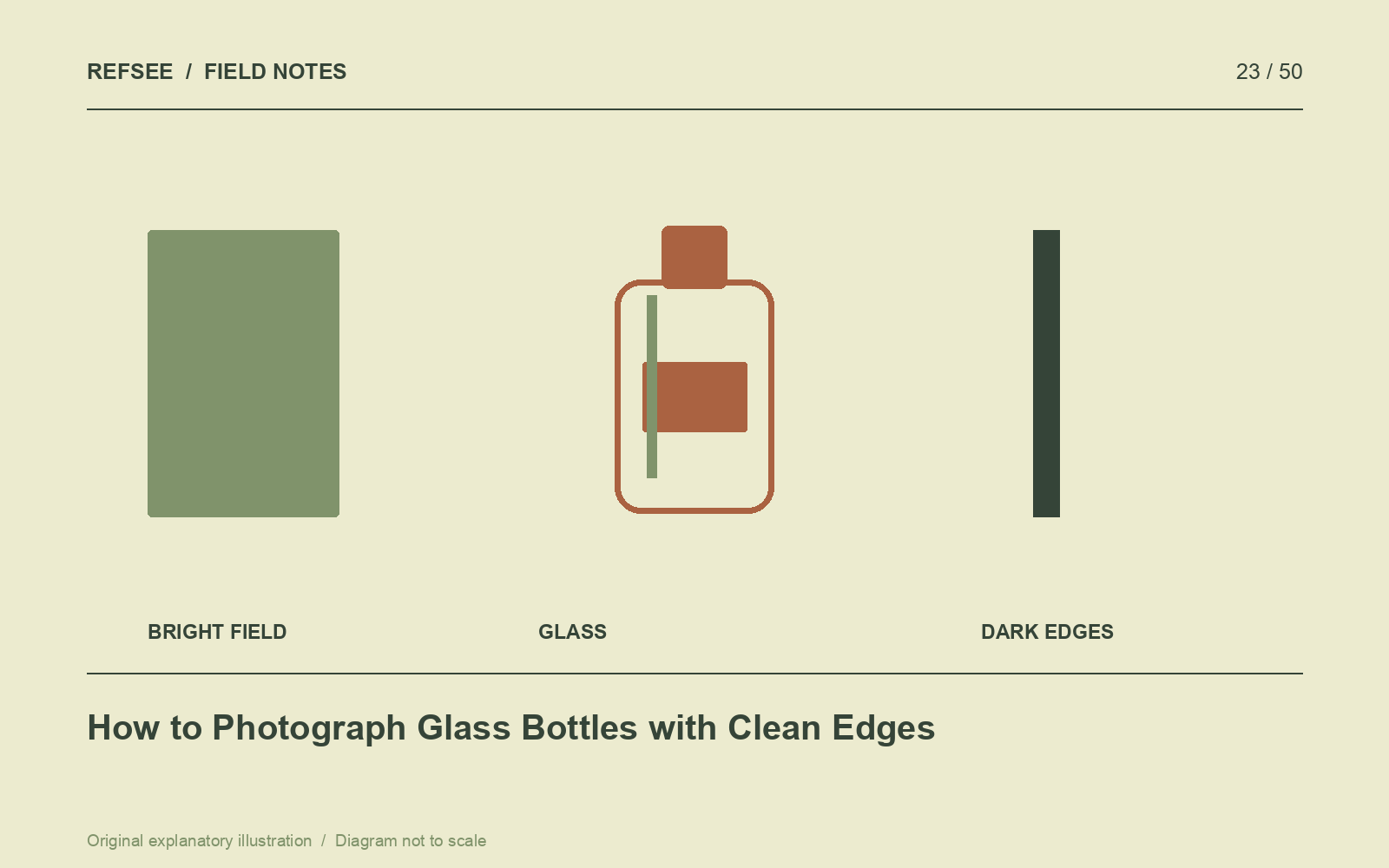
Start with bright field or dark field
In a bright-field approach, place the glass against a bright background and use darker surrounding areas or cards to create visible edges. In a dark-field approach, work against a dark background and arrange bright surfaces or lights so the edges appear luminous.
These are starting structures, not rigid formulas. Bottle shape, glass thickness and liquid color will change the result. Begin with a single empty bottle and move the background and cards while observing the camera image.
Make reflections intentional
A long vertical highlight can describe the curve of a bottle. Several unrelated reflections can make it look dented or cluttered. Use diffusion surfaces with clean edges and inspect the entire bottle from neck to base.
Rotate the bottle and camera in small increments. A change that improves one side may introduce another reflection near the label. Keep a reference frame when you reach a useful balance so later adjustments can be compared objectively.
Light the label as a separate problem
The lighting that makes transparent glass elegant may leave a paper label dark. Add or redirect a controlled source to make the label readable without destroying the bottle edges. Check glossy labels for glare, particularly over small text and logos.
If several exposures will be combined, lock the camera and product position. Plan the layers before shooting rather than discovering in post that the label and glass versions have incompatible reflections or slightly different angles.
Prepare the surface carefully
Remove dust and fingerprints with a method suitable for the bottle and label. Watch for condensation that changes between takes. For a chilled-product concept, decide whether the droplets should communicate a just-served drink or become a stylized texture, and maintain consistency accordingly.
Review the final image on both light and dark page backgrounds if it will appear in an online store. An edge that looks clear on the studio monitor can disappear in the actual placement. Keep product color and label proportions faithful throughout retouching.