Journal
Stop-Motion Product Video: Plan Small Moves and Stable Light
Create a stop-motion product sequence with fixed exposure, consistent increments, secure objects and a simple frame plan that controls timing.
Refsee ·
Stop motion creates movement from a series of still photographs in which objects change position between frames. The method is simple, but the consistency of light, camera and increments determines whether the result feels deliberate. Start with one short action, such as a package sliding into frame and opening.
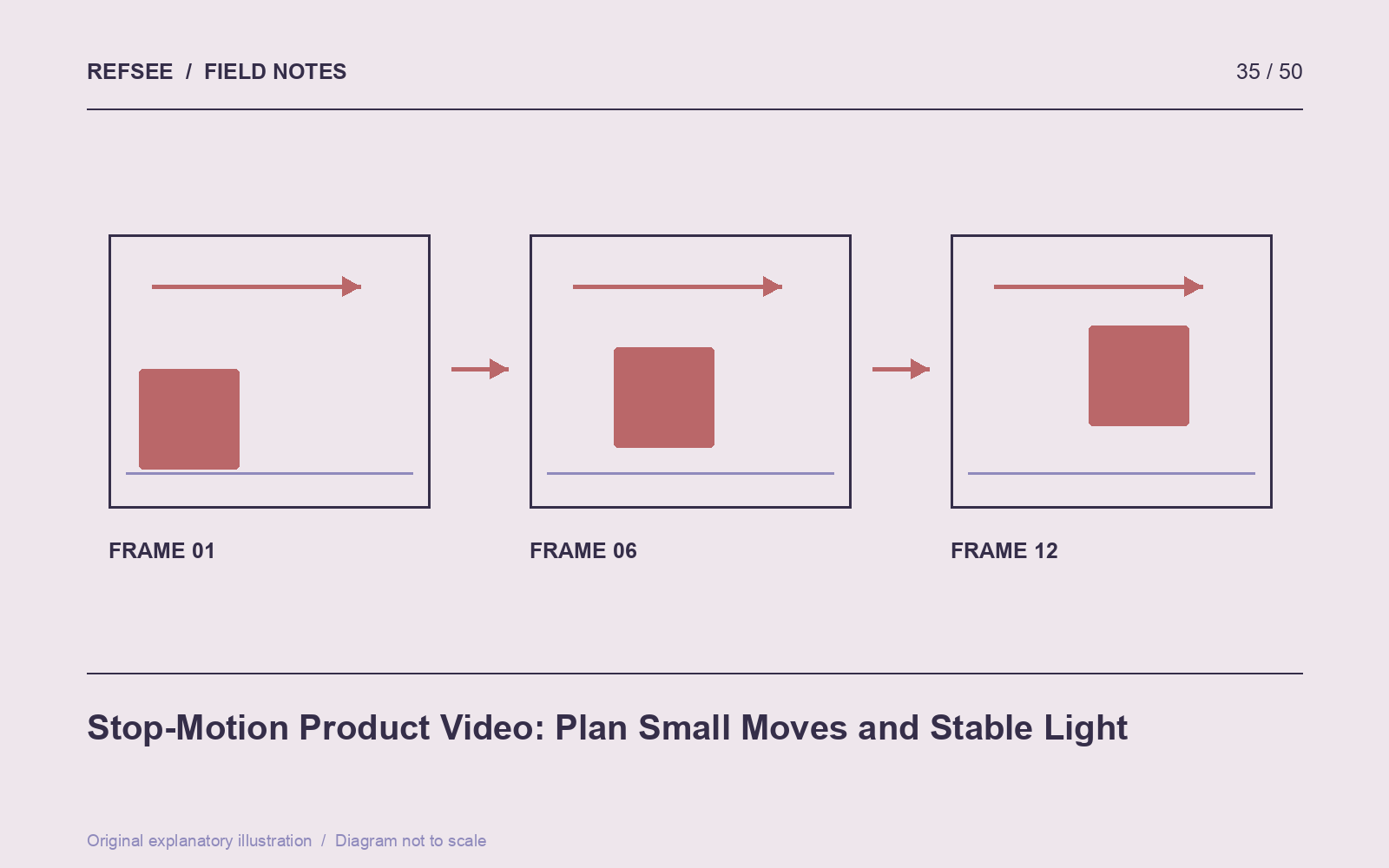
Plan duration in frames
Decide the playback frame rate and the length of the action. At twelve unique images per second, a two-second move requires twenty-four unique images. If frames are held or repeated in a higher-frame-rate delivery, plan those holds explicitly.
Sketch the starting position, a few important intermediate positions and the ending position. Divide the distance into increments. Equal spacing creates roughly constant speed; smaller increments near the beginning or end create a gentler start or stop.
Lock the variables that should not move
Secure the camera and use manual exposure, focus and white balance. Avoid changing daylight if possible, because gradual shifts can become visible flicker in playback. Test the lighting and camera settings before committing to a long sequence.
Keep the working surface stable. A small camera bump or background shift can affect every later frame. Mark positions outside the visible area and use a capture workflow that lets you compare the current frame with the previous one.
Give the product a believable motion rule
A rigid box might slide and settle. A soft pouch might compress slightly before moving. Choose a consistent physical character rather than making the object float randomly between unrelated positions.
Use supports only where they can be hidden or removed through a planned cleanup process. Capture a clean background plate when it will help. Check that the support does not change the object's shape or cast a shadow that becomes difficult to repair.
Review before completing the whole sequence
Play back a short test to evaluate speed, flicker and contact with the surface. A move that feels slow while you photograph it may play surprisingly fast. Adjust the increment plan before capturing the remaining frames.
Add sound after the motion works visually. Small taps, slides and material sounds can reinforce weight, but they cannot rescue inconsistent movement. Preserve the source frames and timing notes so the sequence can be revised without guessing which images were held or repeated.