Journal
AI Image Prompts: Translate a Reference into Visible Instructions
Write clearer AI image prompts by describing subject, composition, light and material, then refine one variable at a time against a visual reference.
Refsee ·
An effective AI image prompt describes what should be visible. Long strings of praise such as “stunning, award-winning, ultra-cinematic” provide less practical control than a clear subject, viewpoint, light direction and material description. Begin by analyzing the reference image instead of trying to name its overall style.
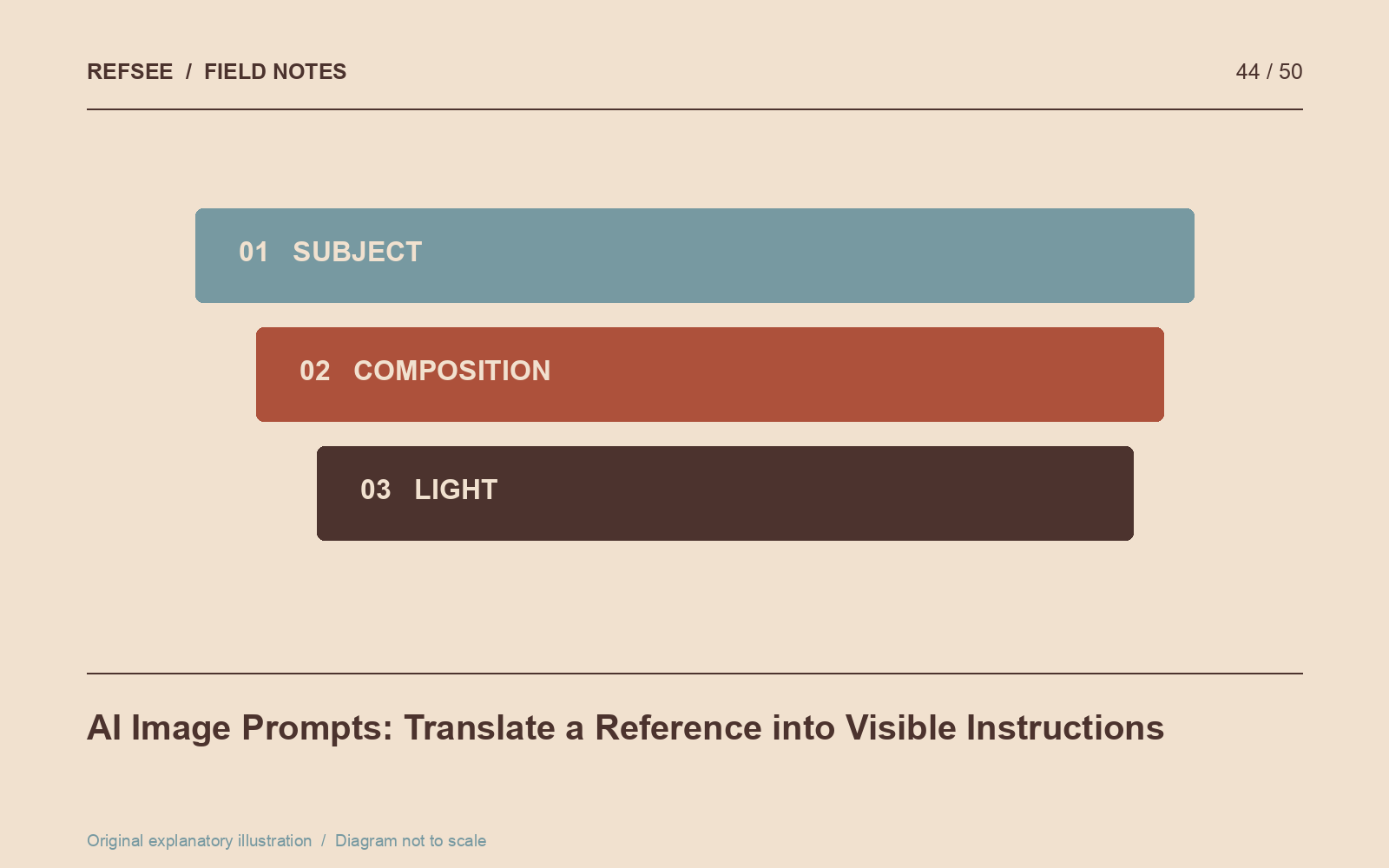
Break the reference into decisions
Describe the subject and action, shot scale, camera position, environment, dominant light and color relationships. Add material details that matter to the scene. Separate essential requirements from optional atmosphere.
For example: “A translucent amber bottle on a pale stone ledge, close product view from slightly below, broad side window light, a clean dark edge on the bottle, quiet warm-neutral background.” Each phrase points to an observable feature.
Keep the first prompt manageable
Use one coherent scene rather than several competing compositions. “Extreme close-up” and “full room view” can pull the result in different directions. If a detail must remain small in the frame, say so rather than giving it the same descriptive weight as the main subject.
Treat camera and lens language as guidance, not a guarantee of a physically simulated optical system. Different models interpret such terms differently. Evaluate the resulting perspective and depth directly.
Iterate one variable at a time
Keep a record of the prompt and settings available in the chosen tool. Change the light direction while holding the subject and composition steady, then compare. If you change everything after every result, it becomes difficult to learn which instruction mattered.
When reference-image controls or negative prompts are supported, test their behavior rather than assuming all tools use them in the same way. A reference may influence structure, color, identity or several features at once.
Judge against a short checklist
Check subject accuracy, composition, light, materials and unwanted artifacts. Inspect hands, product geometry, reflections and any text relevant to the intended use. A pleasing thumbnail can conceal details that fail at delivery size.
Use AI-generated images as clearly identified concepts when they do not depict a real production or finished product. Keep the useful results alongside the visual references and your notes. The goal is a repeatable direction that you can explain, not a lucky image whose important choices remain a mystery.