Journal
Creative Pitch Decks: Make the Visual Argument Easy to Follow
Build a creative pitch deck with a clear recommendation, evidence, visual examples and practical next steps, keeping each slide focused on one decision.
Refsee ·
A creative pitch deck should help someone understand and evaluate an idea. Beautiful slides matter, but they cannot replace a clear argument. Begin by writing the recommendation in one sentence and the decision you want the audience to make after the presentation.
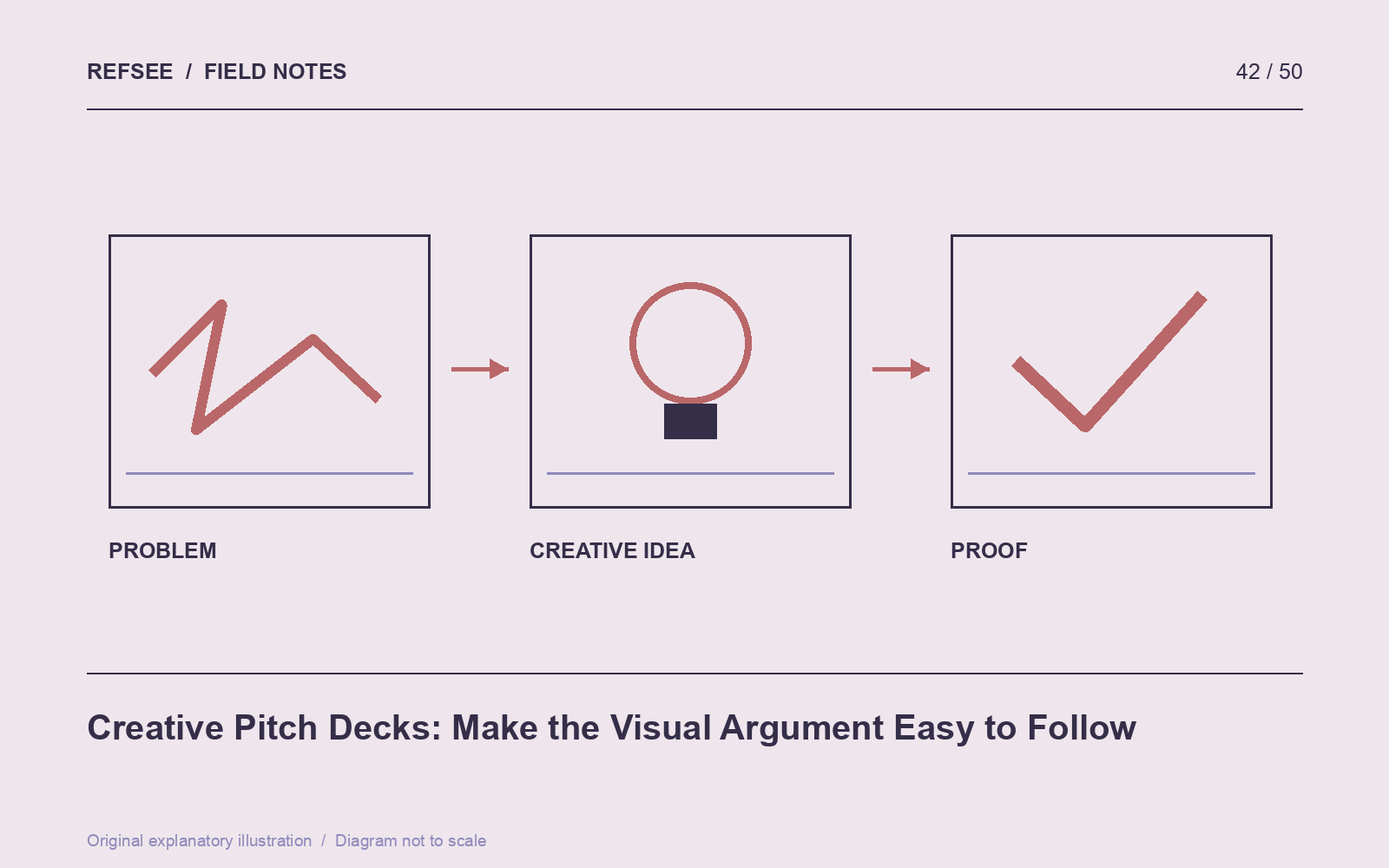
Establish the problem in the audience's language
Describe the communication challenge without inflating it. “The product's main benefit is difficult to see in a still image” is a useful problem. “The brand must revolutionize engagement” is too broad to guide a creative response.
Use evidence that is relevant and supportable. If a claim comes from research, cite the source and date. If it is a working assumption, label it as such. Do not invent metrics to make a visual concept appear proven.
Give each slide one job
A slide may define the problem, introduce the idea, show a key image or explain execution. Avoid asking one page to perform all four jobs. Write headings that communicate a point rather than merely naming a section.
For example, “Show the mechanism in one continuous action” carries an argument. “Creative approach” only tells the audience what kind of slide they are viewing. The deck should remain understandable when someone skims the headings afterward.
Make references explain the proposal
Use a small number of relevant images with annotations. State which quality matters: composition, pace, material, lighting or performance. References should reduce uncertainty, not imply that a finished result will duplicate another creator's work.
Add a rough storyboard, mockup or test when it answers a question that a moodboard cannot. A simple demonstration of the central mechanism is often more persuasive than several polished pages of atmosphere.
End with an actionable choice
Summarize the recommendation, the work required to develop it and the decisions still needed. Separate confirmed scope from options. If presenting multiple directions, explain the tradeoff between them instead of leaving the audience with an unranked collection.
Rehearse the deck aloud and remove sentences you would never naturally say. Check image sources, names, spelling and links. Then send a version that remains readable without the live narration. A good pitch makes the idea easier to discuss, not harder to question.