Journal
Sound Design for a Short Brand Film: Start with the Physical World
Build a short brand film's sound from ambience, actions, material detail and silence, using music to support rather than cover the visual story.
Refsee ·
Sound design gives images material, distance and continuity. In a short brand film, it can make a product feel tangible and help connect shots that were recorded separately. Start with the physical world of the images before adding a layer of generic whooshes and impacts.
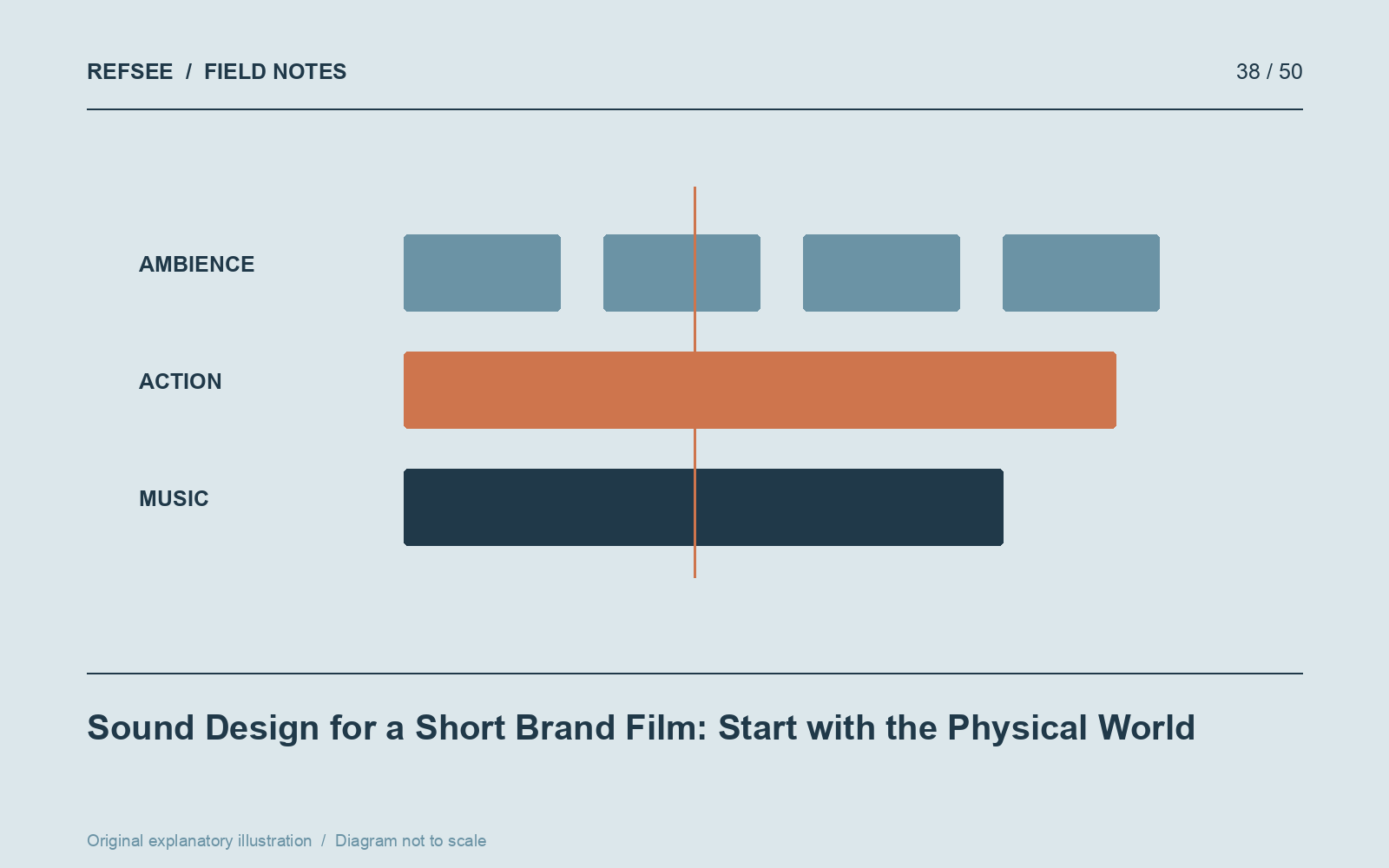
List what the viewer expects to hear
Watch the cut without music and note visible actions: a cap opens, fabric brushes a surface, a chair moves or a door closes. Decide which sounds should be literal, which can be heightened and which are better left quiet.
Add an environmental bed where it helps establish space. A workshop, kitchen and outdoor terrace should not all have the same empty acoustic feeling. Keep the ambience subtle enough that it supports the action without becoming a competing subject.
Choose a small sonic vocabulary
Connect the sound palette to the materials and brand character. A precise metal click, soft paper fold and restrained room tone create a different world from deep impacts and synthetic sweeps. Consistency matters more than the number of layers.
If using library sounds, verify the license for the intended use and keep source records. For custom recordings, capture several clean variations and a little quiet before and after each action. That extra space makes editing easier.
Use sound to bridge cuts
An action can begin audibly before it appears, or its sound can continue over the next image. These overlaps help the sequence feel connected. Match the acoustic perspective to the image: a distant action should not always sound as though the microphone is touching it.
Avoid giving every cut an audible accent. Constant impacts remove contrast and can make a restrained visual concept feel aggressive. Reserve emphasis for changes that matter.
Leave room for the message
If the film includes speech, build the mix around intelligibility. Music and effects should make space for important words. Check the film on ordinary speakers and headphones, not just the editing setup.
Deliver according to the destination's actual audio specifications rather than a universal loudness target. Listen for clipped peaks, abrupt ambience changes and an ending that cuts off unnaturally. A convincing final mix often contains fewer obvious effects than the first version, with each remaining sound doing a clear job.