Journal
How to Write a Shot List for a Small Film Crew
Plan a small-crew shoot with a practical shot list covering story beats, framing, sound, setup order and the shots you cannot afford to miss.
Refsee ·
A shot list translates a scene into camera setups the crew can execute. For a small team, it should do two things at once: protect the story and reduce unnecessary changes. A long spreadsheet is not automatically a good plan. If nobody can identify the essential shots under time pressure, the document is too complicated.
Start with the change in the scene
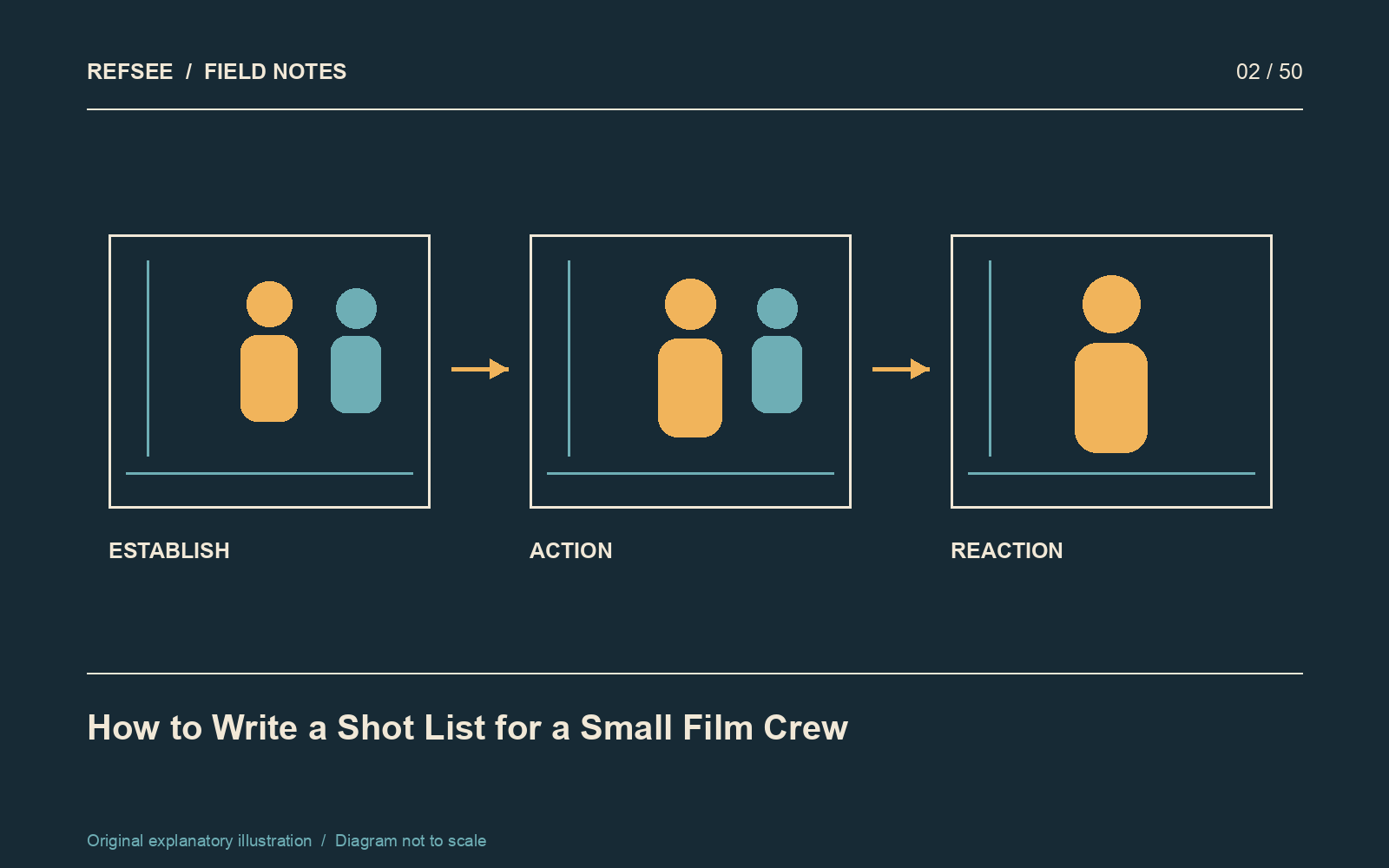
Before choosing lens sizes, write what becomes different. A customer arrives confident, hears the price and leaves embarrassed. Those three beats suggest different visual information: the entrance establishes confidence, a shared frame communicates the exchange, and a reaction makes the emotional turn readable.
List the shots needed to show those changes. Add decorative details afterward. A close-up of a spinning ceiling fan may be attractive, but it should not consume the time reserved for the reaction that makes the scene understandable.
Use columns that answer real questions
Include scene and shot ID, action, shot size, camera position, movement, sound needs, estimated setup time and priority. If lenses have not been tested, write the desired relationship instead of an arbitrary focal length: “close face with enough background to see the exit.” Choose the lens during scouting or a camera test.
Mark shots as essential, useful or optional. Essential means the edit will struggle without it. It does not mean the director particularly likes it. Include sound pickups, room tone and inserts that establish continuity, such as whose hand takes the receipt.
Shoot in setup order, think in story order
Your narrative order might alternate across a table. Your shooting order can group everything facing one direction so the lights do not move repeatedly. Keep both orders visible through stable shot IDs. Renumbering halfway through the day makes notes and slates harder to reconcile.
For a two-person conversation, test whether a two-shot and two singles cover the scene. If the performance includes a significant physical action, plan a wider safety angle before committing to tighter coverage.
Budget for transitions between setups
Camera time is only part of the day. Allow for rehearsals, focus marks, wardrobe adjustments, batteries and moving furniture back into place. After the first setup, compare the actual time with the estimate and revise the optional list.
End with a coverage check: entrance, geography, key action, emotional reaction and exit. A modest list that secures those elements is more useful than an ambitious list that stops one shot before the story lands.